

Crafting knowledge: Core-Craft-ED blog
Welcome to the Core-Craft-ED blog, your go-to resource for helpful, innovative, and creative ideas! We're dedicated to providing simple, easy-to-use strategies and resources for parents, caregivers, preschool teachers, elementary teachers, stay-at-home moms, and homeschoolers. Dive in and discover how we can support your educational journey.
Growing, not comparing
Comparison is not a helpful mindset, but growth is! We don’t mean to compare, but we do it! We compare our kids to benchmarks, to siblings, to "shoulds" and "at this age" charts. And slowly, we begin to measure them against others instead of nurturing their uniqueness.
Let’s shift that. Let’s trade comparison for curiosity. What if we asked, “Where is this child or student today?” and “Where could they grow next?” instead of “Are they ahead or behind?”
Every learner has a story that unfolds at its own pace. Some bloom early, some late, some sideways. A growth mindset gives room for all of it.
Instead of saying, "He should know this by now," say, "He's learning this right now."
Instead of, "She can’t do that," try, "She’s building that skill."
This language shift, simple as it is, has a profound impact. It removes shame and adds possibility.
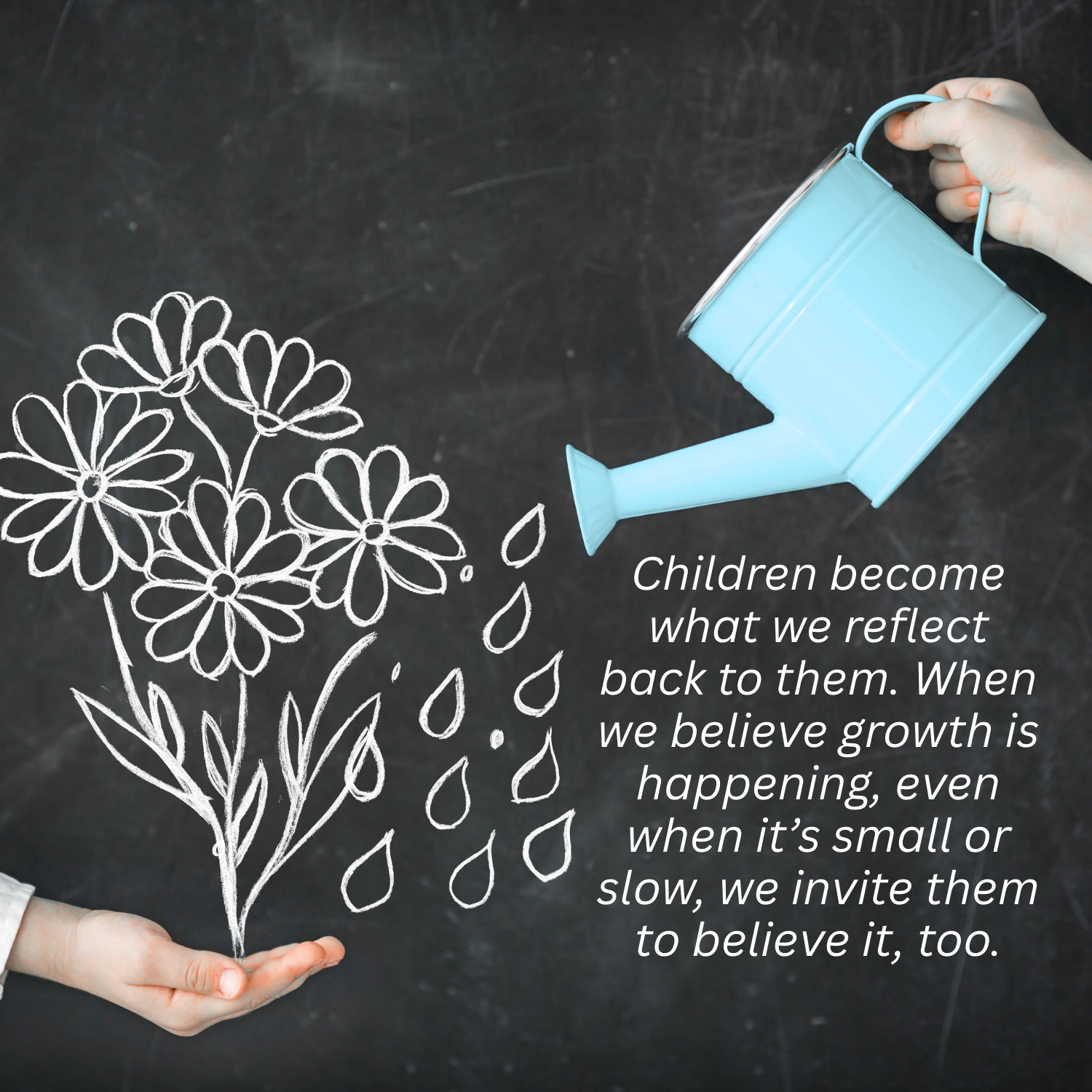
Children become what we reflect back to them. When we believe growth is happening, even when it’s small or slow, we invite them to believe it, too.
We don’t grow from judgment. We grow from encouragement, challenge, and safety. And growth is always possible.
You don’t need to rush the process. You just need to nurture it. One step forward, one supportive word at a time.
Goal-oriented learning
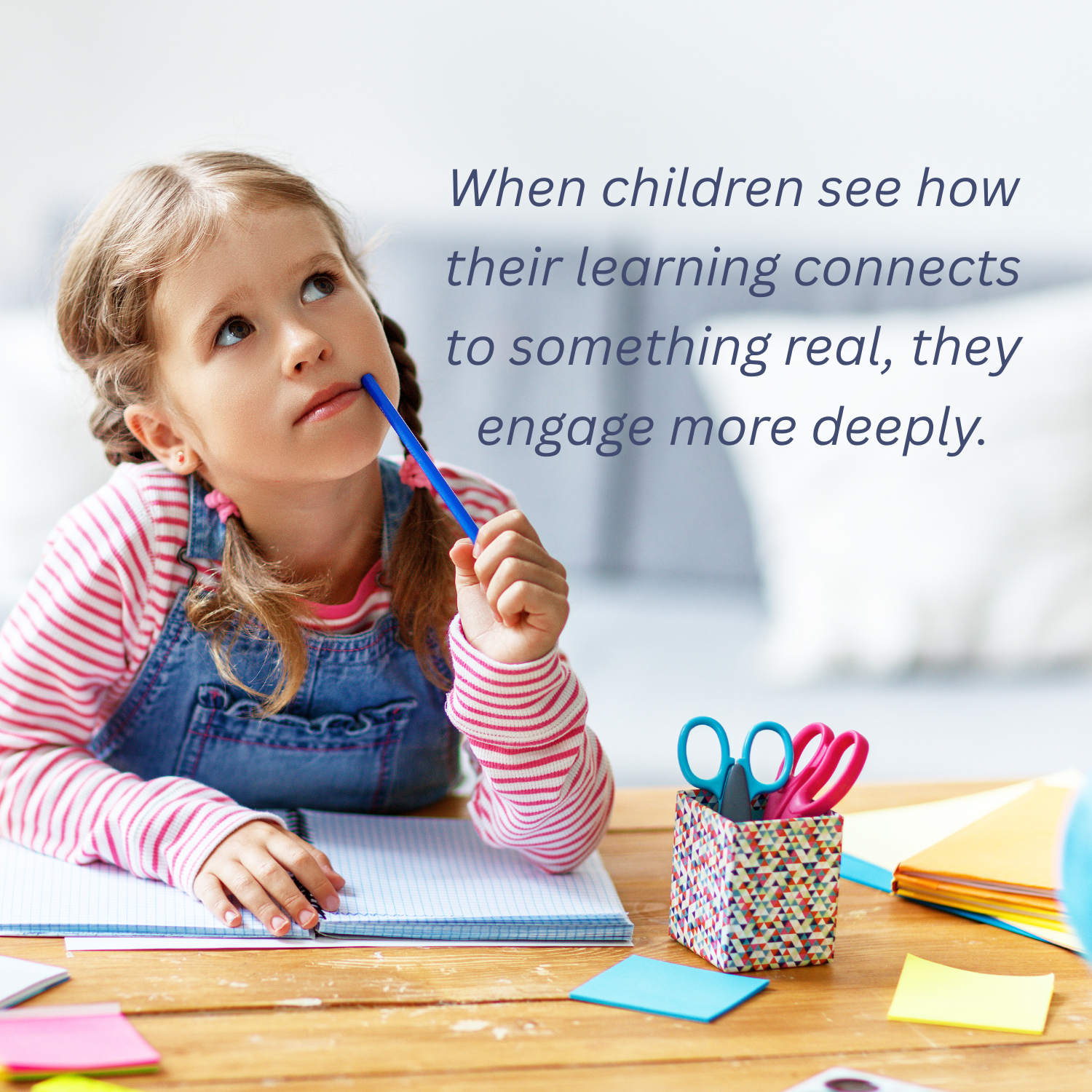
Children thrive when they understand why they’re learning. Instead of completing activities just to "get them done," goal-oriented learning gives purpose and meaning to every task. When children see how their learning connects to something real, they engage more deeply.
Even the youngest learners benefit from a sense of purpose. Instead of saying, "Let’s practice letters," you might say, "Let’s learn these letters so we can write your name on a birthday card!" Or, "We’re going to count these blocks to build a tower as high as we can."
These bite-sized goals give children a reason to care. They also promote agency—kids begin to see themselves as capable learners with something to contribute.
For teachers and parents alike, goal-setting doesn’t have to mean charts or long-term plans. It can be as simple as saying, “Today we’re going to learn to blend sounds so we can read your favorite story.”
When we anchor learning in real-world applications or personal relevance, we activate the brain’s reward systems. This makes learning more enjoyable and more effective.
Purpose turns "I have to" into "I want to."
Small goals. Big gains. That’s the power of intentional learning.
Engaging the brain
It’s easy to confuse busy with productive, especially in early childhood settings. If children are cutting, coloring, hopping, and sorting, we assume they must be learning. But busyness doesn’t always equal brain engagement.
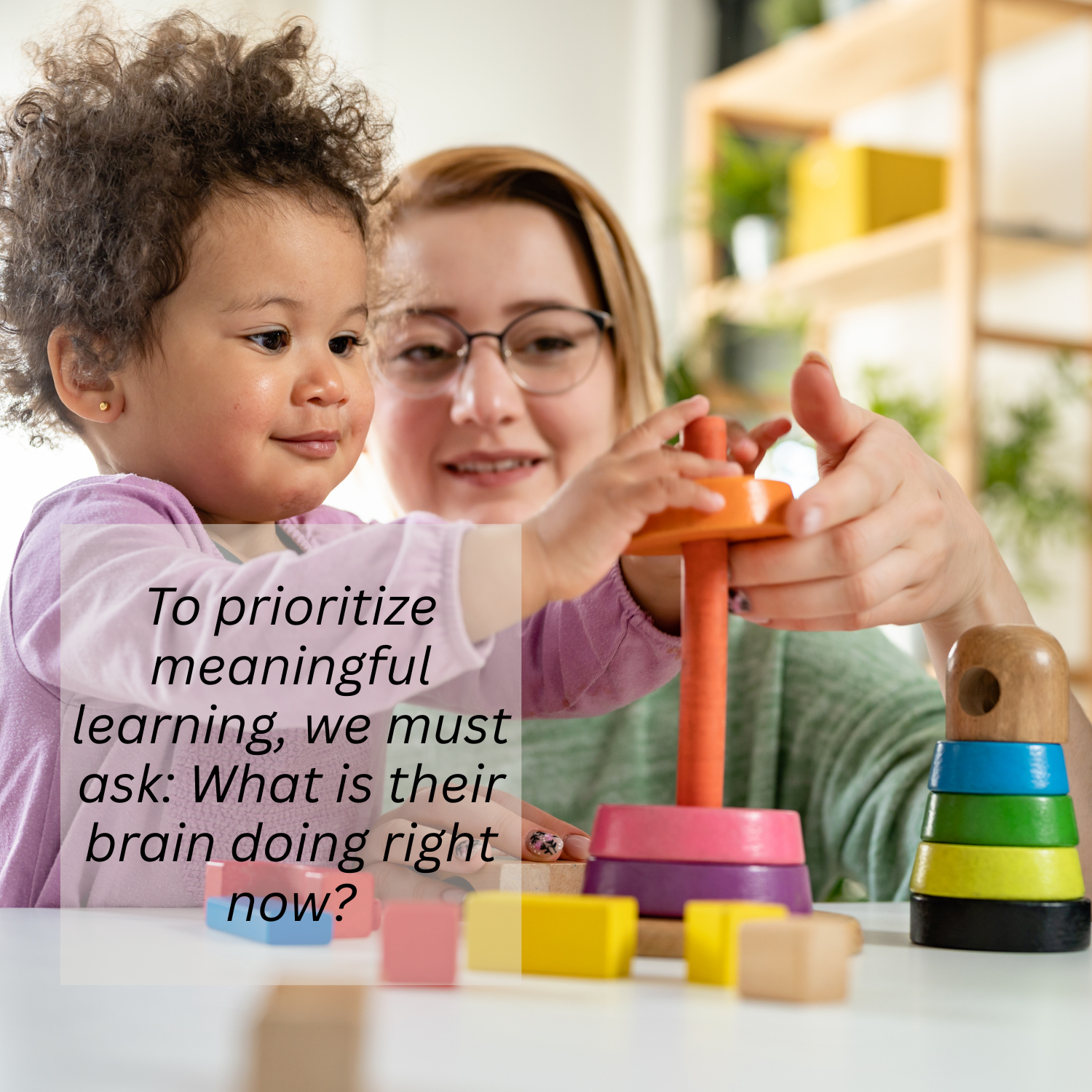
To prioritize meaningful learning, we must ask: What is their brain doing right now?
Are they solving a problem? Are they making a decision? Are they exploring a new idea? If the answer is yes, then we’re likely hitting the mark.
Instead of filling every minute with activity, try slowing down. Choose tasks that activate thinking. Rather than handing out a craft with every step outlined, offer open-ended materials and invite creativity. Instead of matching colors for the sake of it, ask, "What other way could we sort these?"
Children are capable of much deeper thinking than we sometimes give them credit for. Even at three or four years old, they can hypothesize, compare, invent, and reflect—if we give them the chance.
Busy keeps their hands moving. Engaged keeps their minds growing.
Make space for both, but always prioritize the brain.